
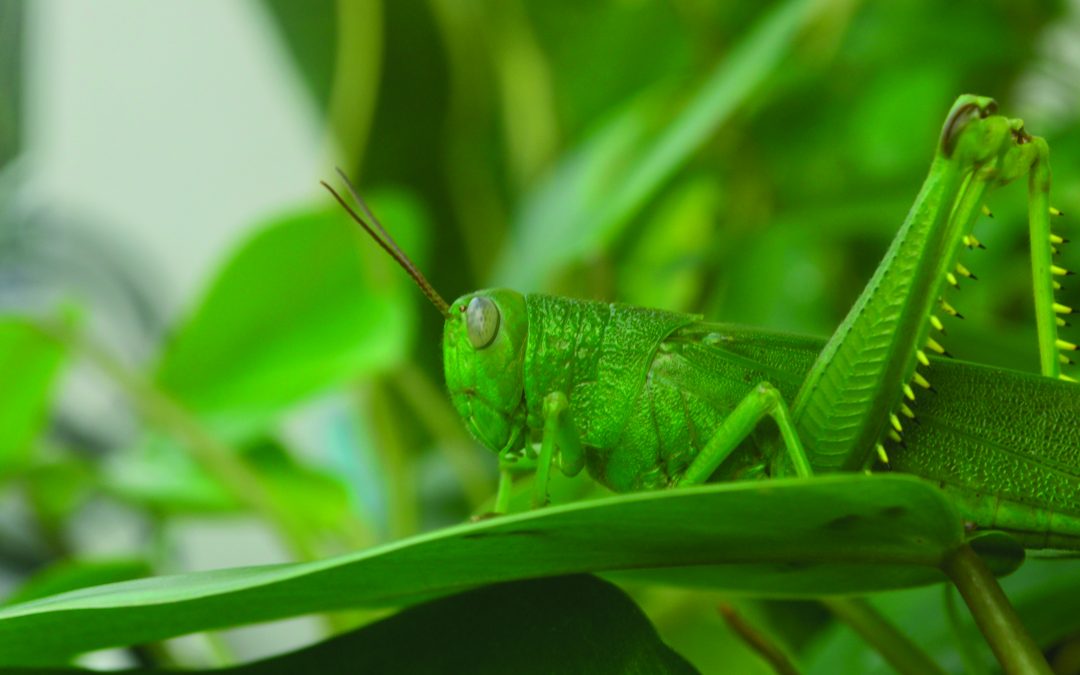
People who study these things say that there are over 10 quintillion insects that crawl, hop or fly around the earth. That number looks like this: 10,000,000,000,000,000,000. That inconceivable figure is comprised of more than 925,000 species that have been identified. How many are still to be discovered is simply unknown. It means that insects constitute 90% of everything on our planet that isn’t mineral or vegetable. Go to the North Pole and you will find springtails and possibly be subjected to mites, lice and fleas. Antarctica is not spared. There are mites, and climate change has produced an invasion of the common house fly. Leave the ground and you still do not get rid of them. Bumblebees have been found at 29,029 feet, the height of Mt. Everest. Locusts fly at 14,764 feet; stoneflies and mayflies at 16,4904 and butterflies still flit around at 19,685. Speaking of locusts, in February, north east Kenya experienced swarms of them that were of biblical proportions. One swarm was 25 miles wide and 37 miles long. It contained more than 40 million bugs that consumed enough food to feed 35,000 people.
Why is all this important? The simple, uncomfortable fact is that if all the insects on earth were to vanish in some cataclysm, we would go with them. We cannot survive without bugs. Yes, they chew away roof rafters, ruin picnics, destroy our roses and give us malaria – and they can destroy crops. But the good outweighs all else. If you enjoy apples, cherries, plums, onions, potatoes, almonds and all kinds of berries, thank some of those 10 quintillion for their pollination that keeps these edibles growing.
Many bugs are an important food source in some countries. There are now several cricket farms throughout our own. Crickets are a good source of protein. They are sustainable and certainly easier to raise than cows. They also produce 80% less methane than the 110 kg a single dairy cow pumps into the atmosphere per year. If you also want to sustain bluebirds, cardinals, grosbeaks, nuthatches, titmice, woodpeckers and warblers, keep in mind that they thrive on moths, larvae, caterpillars, ants and beetles of all kinds. Bug on.